

Lately, I’ve been taking more time to acknowledge and feel grateful for how far I’ve come. I’ve been relishing every moment in this new role I’m stepping into as a guide, which feels especially meaningful given that I once imagined I’d become an elementary school teacher.
What fulfills me most is realizing that I am still teaching—but in a way that’s expanding my community in powerful ways. I’m noticing a pattern in how my closest connections are forming; followers are becoming friends, clients are becoming sisters, and within these relationships, there’s a deeper, more genuine appreciation for who I am as a person. While they value my services, what truly sets these connections apart from the ones I’ve let go of in my past is the presence of my full, authentic self.
Earlier in my life, the friendships that didn’t work out usually followed the opposite pattern: I was always trying to be like them—doing the same things, talking the same way, dressing the same way. I never truly felt fully known, fully seen, or genuinely appreciated. And it didn’t always seem intentional, so I kept acting in ways that allowed these people to stay in my life. Only now do I realize why: I didn’t see, understand, or appreciate myself.
I wonder if those dynamics were always meant to transform me from a follower into a leader. I don’t think those friendships formed because I was already being myself; they formed while I was still in the process of trying to find myself. It’s no surprise, then, that the teachings and services I offer now are designed to guide my community back to themselves.
Because more and more, I find myself having a problem with how rarely we’re given that direction in this world. Too often we’re told what to do, how to think, who to be, and what to believe—while our inner truth is left to suffer in silence. It shows up in our mental and emotional health struggles, in our chronic fatigue, in our fears, and in the way we shrink ourselves to fit into spaces that were never made to contain who we truly are.
Nothing illustrates this more clearly to me than the religious conversations about “shoulds” that I keep seeing play out…
I recently came across a video where a young man was visiting different church denominations and rating his experiences. The first stop was a Presbyterian church—and the “worst part,” according to him, was that they had a female pastor. He ended by saying, “Do with that information what you will...”
So of course, I went straight to the comments (usually where I find the real entertainment). And it was the usual divide—“what’s wrong with a female pastor?” versus “the Bible clearly states women aren’t meant to lead/preach/minister. It’s blasphemy.”
And that last one… I just have to ask. Why are we still using words written in a book thousands of years ago to decide what a woman is allowed to do today? I understand that for many people, following the Bible as law is a sincere and deeply held conviction. I do respect that. But I also can’t ignore that much of the translation, interpretation, and institutional framing of the Bible over the last 500 years was shaped within male-dominated Western European power structures. These interpretations often contradict each other, and even scholars can’t agree… yet somehow this is what’s used to define a woman’s role?
Sounds eerily familiar...
“Women shouldn’t vote.”
 “Blacks can’t sit here.”
“You can’t love someone of the same gender or a different race.”
History has never struggled to find language to justify control… it just changes the source. And now we’re doing it again, using selectively interpreted scripture to define what women should do and be. But the world these texts were written in no longer exists, so why are we still treating those interpretations like they do? And either way, if you choose to follow the Bible as law, that’s YOUR path… but it doesn’t give you the right to script anyone else’s life.
For example, there’s a content creator named Talitha Jane who’s gone viral for her personal transition into a more faith-centered, modest lifestyle. And in my honest opinion, personal obedience is a beautiful thing, but there’s a real difference between living out what God calls you toward and deciding what obedience should look like for everyone else.
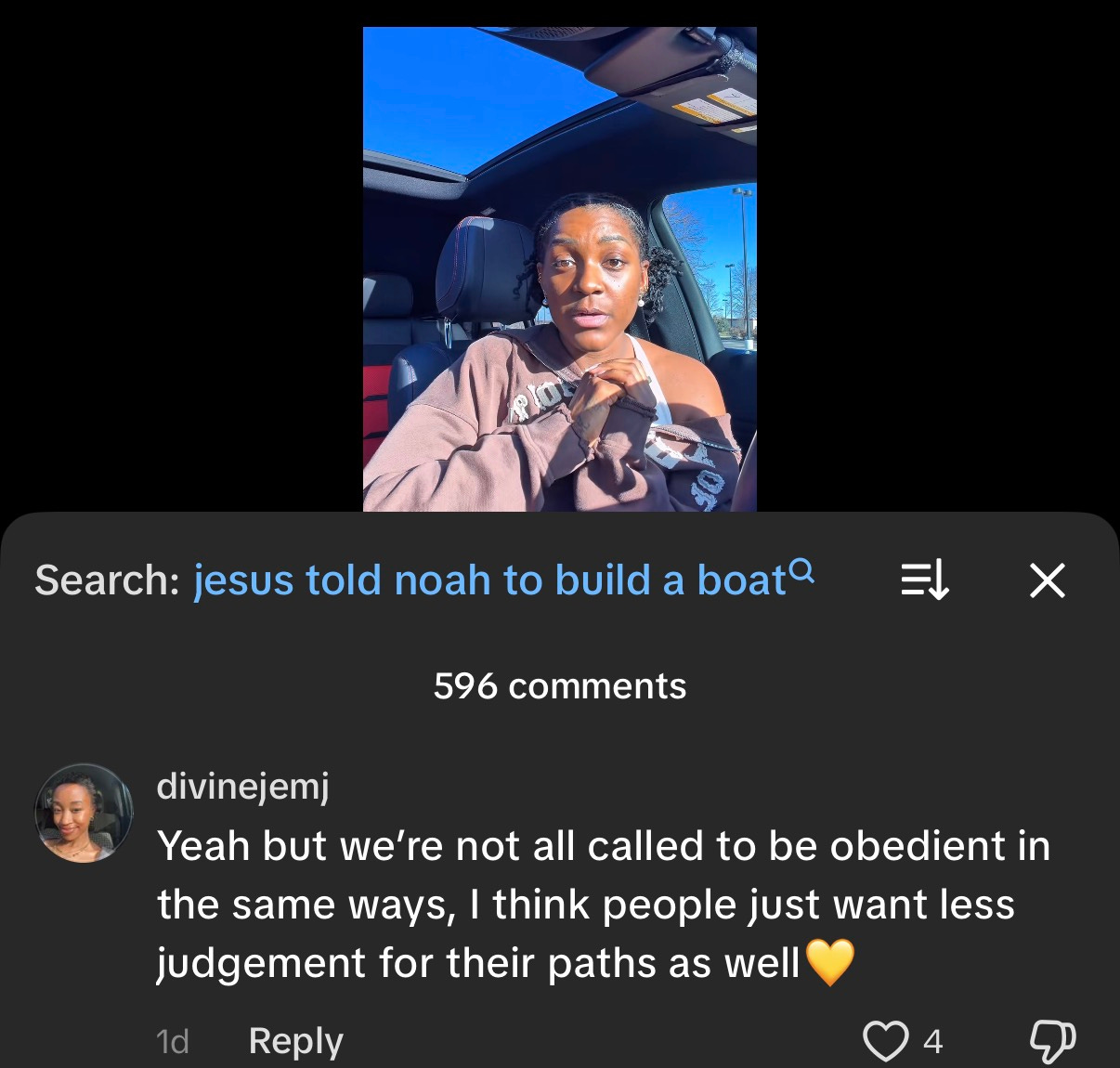
Too often, we’re told what to believe so consistently and for so long that we eventually stop asking why. We stop questioning whether those beliefs are actually true for us, or whether we’ve simply inherited them from someone else. That inherited limitation doesn’t just exist in religion—it shows up in our bodies, spirits, and nervous systems, in our relationships, and in the very sense of what we’re allowed to explore and want for ourselves.
And that’s what’s shaped my purpose with this business and work: helping people find their way back to themselves. Part of that requires vulnerability and a willingness to ask yourself and others some pretty uncomfortable questions… not to tear anything down, but because you deserve to understand the difference between what you truly believe and what you were simply taught to.
So it’s okay if you believe not every woman is called to lead… not every man is either. But I don’t believe gender should be the deciding factor for any of it. The most aligned, the most capable, the most called person should be the one who answers. Whatever that looks like… whoever they are.
That’s it.
So what I want to ask you is this: what influences your beliefs and the decisions you make? The etymology of the word “decide” means to cut something off… not just to choose something, but to become aware of everything you don’t choose. So when you make a decision—when you choose what to believe about yourself and others—what are you actually cutting away? And who or what has shaped those beliefs about who or what is undeserving… including yourself?
If my stories, readings, and reflections bring value to your journey, inspire, or guide you, I would be truly grateful if you’d consider supporting me. You can become a paid subscriber, book an affordable tarot reading to help me practice and grow, or even offer a small contribution via my tip jar.
Always look forward to your views and insights