

Welcome back to another Sacred Sunday divine tribe!🌞
I’m not gonna lie—this week’s post hasn’t been the easiest for me to write. The process of writing can be incredibly therapeutic, but sometimes that makes it difficult because I have to face the harmful decisions I’ve avoided taking accountability for in my life.
I just started therapy again two weeks ago, and after my first session, I left feeling more validated than I have in a long time. My therapist brought up something I wasn’t fully ready for but needed to accept: the need to dive deeper into my inner child healing work, which, let’s be real, is not a quick fix.
My first assignment: read The Empath’s Survival Guide by Judith Orloff, MD.
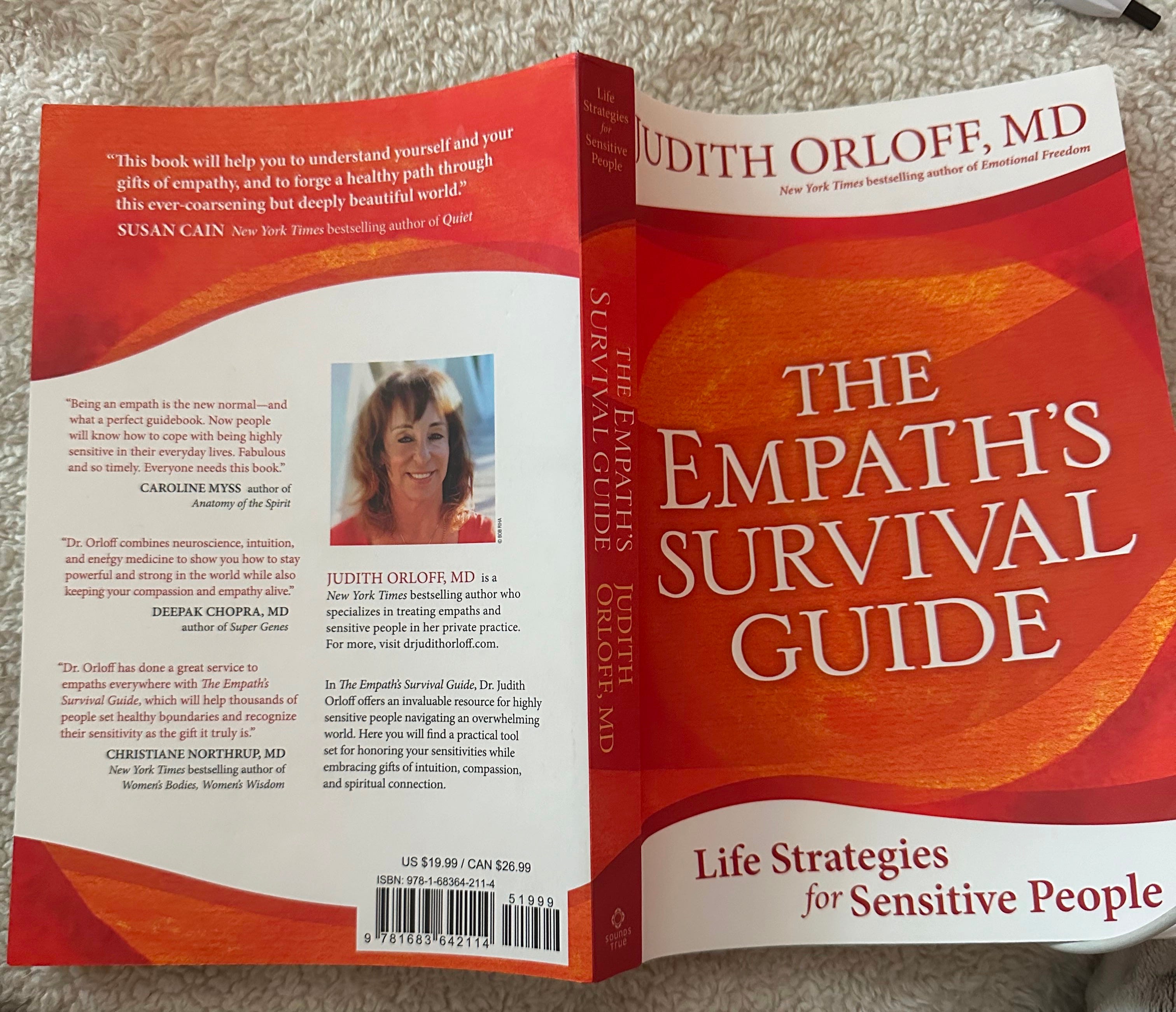
Now, I’m not here to give you a full breakdown of the book (I’m still working through it myself), but wow, just a few chapters in, and it’s already been an eye-opening experience. So instead of doing a book review, I want to open up about my struggles as an empath—the sensitivities, the blurry boundaries, and how it’s led me to lean on harmful habits as a way to cope.
I’m on the brink of a major shift in my life, but it’s become clear that the breakthroughs won’t arrive until I face these darker parts of myself head-on. The change coming for me is bigger and better that’s for sure, but I can tell the universe has been holding off to make sure that I’m ready to embrace it—with better habits, a clearer mindset, and a more grounded sense of self.
If any of this sounds like your story too, consider this a little guide to what we should be watching out for and what we can start healing as empaths in this world.
While most people can empathize with others’ emotions during tough times or share in their joy during celebrations, empaths experience empathy on a profoundly deeper level.
Our neurological systems are incredibly reactive, lacking the filters most people have to block out excess stimulation. This heightened sensitivity means we absorb emotions and physical symptoms from our surroundings as if they were our own. This can be due to hyperresponsive mirror neurons, a group of brain cells responsible for compassion.
Empaths share traits with Highly Sensitive People (HSPs), such as a low threshold for stimuli and sensitivities to light, sound, and smell. However, empaths go a step further; we can actually sense and absorb energy, known as shakti or prana in Eastern traditions. This ability makes it challenging for us to distinguish between someone else’s discomfort and our own.
Types of Empathy
Sometimes the ability to sense energy can lead to intense spiritual and intuitive experiences. Depending on the type of empath you are, you could be able to communicate with animals, nature, and your inner spirit guides:
Physical Empaths: Being attuned to people’s physical symptoms and absorbing them into your body. You can be energized by someone’s sense of well-being or feel ill around someone who is sick.
Emotional Empaths: Picking up on other people’s emotions, both happy and sad.
Intuitive Empaths: Experience extraordinary perceptions including:
Telepathic: Receiving intuitive information about others in the present time.
Precognitive: Having premonitions about the future while asleep or awake.
Dream: Receive intuitive information through your dreams that can help guide you or others.
Mediumship: Can access spirits on the other side.
Plant: Can feel the needs of plants and connect with their essence.
Earth: Attuned to the changes of our planet, solar system, and the weather.
Animal: Can tune in to animals and communicate with them.
Learning about the different types of empathy was really interesting because it uncovered the magical power our minds truly hold and the ways in which we are all energetically connected.
Growing Up An Empath
If you feel as if you don’t fit into this world, it’s because you’re here to create a better one.
Author unknown
From a young age, empaths can feel like outcasts, typically misunderstood by their families and invisible to the greater world that doesn’t value sensitivity and I could certainly relate. As a child, I felt like a black sheep in my own life. Surrounded by loved ones, I still feel isolated and lonely, as if there’s a disconnect between how I interact with the world and how it interacts with me.
As a child I was often told to:
“toughen up”
“develop a thicker skin”
and to “stop being so sensitive/emotional/dramatic”
…which only compounded my feelings of not fitting in. As Orloff points out, “As children and adults, we are shamed for our sensitivities rather than supported.”
I didn’t always understand what was going on within me or why being my authentic self was causing such an issue with the people I loved. So now I often go back and forth mentally between trying to assimilate myself with the rest of society and realizing that the universe is forcing radical self-acceptance and love upon me.
The Empath’s Experience
Being an empath in today’s world presents unique challenges, especially when navigating relationships. Socializing, even in small doses, can lead to exhaustion, anxiety, or even physical symptoms like migraines and chronic fatigue.
One of the biggest lessons empaths must learn is the power of emotional contagion—the idea that we absorb and take on the emotions of others. This makes it crucial for us to have good discernment with who we surround ourselves with. Negative energy, whether from toxic friends, family, coworkers, or romantic partners, can easily weigh us down, leaving us feeling drained and overwhelmed.
Our need for space and alone time can be perceived as standoffish when in truth, we are just trying to protect ourselves from sensory overload. Our hypervigilance—constantly scanning people’s body language and tone for safety—can make us seem distant or aloof, especially when we sense inauthenticity. Our bodies naturally tense up around disingenuous people and we struggle to participate in small talk and surface-level interactions, preferring deeper, more meaningful conversations. This can create an awkward vibe that pushes people away, even when we’re simply trying to navigate our surroundings.
For many empaths, social anxiety or agoraphobia can drive us to withdraw from the real world, preferring online interactions where we can keep a safe distance. I find it easier to make friends online and communicate through text, as it allows me the space to think clearly and communicate without absorbing the discomfort or stress of others, offering a much-needed balance between connection and self-preservation. However, even with these boundaries, there’s often a reluctance to express our true sensitivities, fearing judgment or abandonment from those who don’t understand our experience. It’s a delicate balance—trying to be open and authentic while also protecting ourselves from the emotional fallout of a world that doesn’t always value empathy.
In romantic relationships, our deeply loving nature can lead us into dangerous territory. Because we give so much of ourselves so easily, we’re often drawn to—or taken advantage of by—narcissists or emotionally unavailable partners. Especially if they reflect our relationships with our parents. We tend to assume that others will reciprocate our level of love, compassion, and understanding, but that is rarely the case.
I deeply resonate with this in general because I often wonder why people move with so many underlying motives rather than out of love and kindness. Between feeling like I’m in an imaginary competition, being passively gaslit, or humbled by past romantic partners, friends, and even my closest family members, it’s just hard to trust people at this point. I don’t think people are perfect but it’s honestly sad to me that it’s so hard for people to be genuine and authentic. Everyone is capable of being manipulative as I have been many times, but I never move intending to. That part I will just never relate to.
This pattern of giving too much, too quickly often leaves us feeling drained, anxious, and even physically ill. Relationships can become toxic as we take on the weight of others’ emotional baggage, leaving little room for our own needs and boundaries.
To cope with the fatigue, physical symptoms, and intensity of our empathic experiences, many of us turn to unhealthy habits like alcohol, drugs, or smoking to numb our heightened sensitivities and this is where my issue lies.

It’s ironic how my whole mental health and healing journey started with an incident related to smoking marijuana, and now what seems to be my latest lesson is to finally let it go. The drug that helps me feel “normal,” social, and even “closer to the divine” has quickly become a crutch to avoid feeling the depths of my issues. Smoking doesn’t make things easier to handle; it just dulls your emotions and experiences at the moment just to fully experience them later. No matter what, it was all gonna catch up to me, and now it has. Instead of finding relief or the ability to relax, I’m just experiencing more and more irritation, anger, and frustration.
Going back to what my therapist said, now is the time to stop running away from my feelings. If I continue to ignore the lingering issues of my childhood, I will never achieve the progress I’m looking for. I can’t go back and change the way people treated me, but I can permit myelf to fully feel the emotions I needed to years ago. To let the emotions move through me so that I can finally move on. There’s no other way to love, trust, and accept myself if I don’t.
Standing firm in my boundaries—especially with friends and family—and letting go of smoking are the final steps I need to take to fully embrace the shift I feel on the horizon. This week, I’m committed to embracing my empathetic nature, and reconnecting with myself through meditation, prayer, and reading, without relying on smoking as a crutch.
I hope this insight into the struggles of empaths and my personal journey resonates with you. It’s not about changing who we are to fit in and receive better treatment; it’s about embracing our true selves and using our sensitivities as a source of strength, tecahing others to do the same. We’re here to break societal cycles, to show others the power of compassion, and to guide the world toward a higher consciousness. Yes, it’s challenging, but it’s the reason we were given these gifts.
I hope everyone enjoys the upcoming week, ‘til next time!
- Jordan💛
“…to show others the power of compassion, and to guide the world toward a higher consciousness.” #TRUTH
Thanks for sharing your journey and insights, Jordan. I deeply relate to your experiences, and I really enjoyed that book too. I've seen how challenging it is for friends to step back from marijuana, but I've also seen them emerge from the fog and be much more present and content. You got this! ✨