

I’ve been thinking about parenting a lot lately.
I’m going to be 28 this summer, and I thought I’d be getting started on my second child by now, but instead… I feel an unexpected sense of freedom and excitement for not following that plan. For not having received what I once thought I wanted, and for possibly not wanting it at all anymore. And that’s a bit confusing for me.
Before the age of 27, I genuinely believed becoming a mother would be my greatest purpose and blessing in this life. And now it’s something I’d rather push off a few more years. Not because I don’t want it, but because I finally understand what it actually asks of you—what it requires from you.
The baby fever is still going strong, don’t get me wrong, but I know it’s really just because they’re incredibly cute and because it’s normal to compare yourself when everyone your age is getting married or having kids. But if I’m being honest, I feel like I’ve already done a lot of caretaking in my life, and I’m not desiring to add more onto my plate.
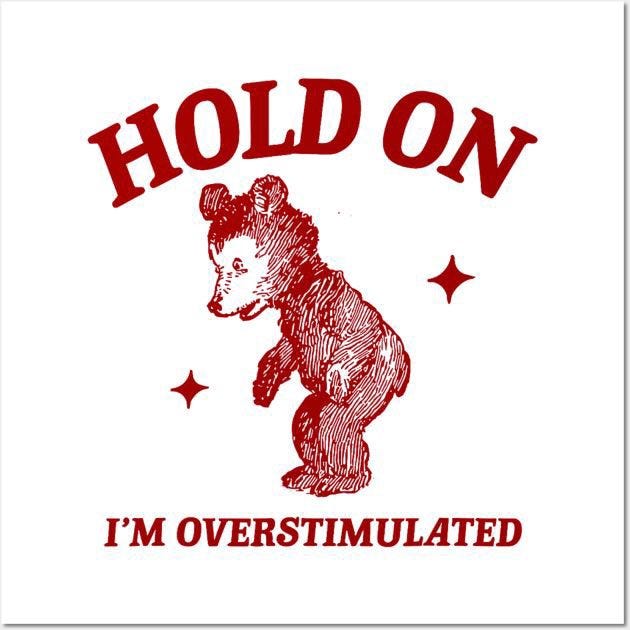
I’ve been a teacher, so of course I’ve already had a lot of experience “parenting” other people’s kids. I also parent my clients in ways, I mothered my exes, was a stand-in mother for my sister, and have done the same for other family members, friends, and even strangers—all while trying to reparent myself on top of that. So yes, for once, I just want to exist.
I want to enjoy my life as it is without immediately thinking about what responsibility comes next, and give myself the time I didn’t always feel like I had before to fully grow into myself. And it makes me think about how many people rush into major life commitments, consciously or not, before they’ve fully found themselves.
How easy it is to feel like you’re falling behind some invisible timeline. But the more I sit with it, the more this “delay” feels like a gift, because I understand now in a more grounded way what it really means to be ready, not in a perfectionistic “I’ve got everything handled” way, but through intentional awareness of self.
This thought has been building for a while now, but it really clicked when I started thinking about my experience with my fathers.
I have two bald-headed daddies, and yes, the stereotype checks out!


I’ve been very… some might say… spoiled, but I say I’ve been very loved and very supported. I’ve been blessed to experience a lot growing up because of all three of my parents, but something about both my dads has really been sticking with me lately.
A while back, I told my stepdad, Peter, that my mom’s kettle was old and starting to peel every time we used it. I wanted to get her a new one for Mother’s Day, but it felt too far away, so he told me to send him some options so we could split the cost and replace it. I sent him a $12 kettle, thinking “good enough”—it works, and that’s all we need, right?
Wrong! Immediately, Peter responded, “Why would we get something so cheap? You and your mom deserve better. Send me more expensive options.”
I laughed, because of course he said that! I just have an issue with asking for more than the bare minimum; I’m working on that. But when it comes to Peter, there’s no hesitation, no second-guessing whether we’re “worth” the better option, no shrinking the standard down to match convenience. It’s just a very natural assumption that if something is being replaced or improved, it should actually be better.
And that’s what made this whole reflection hit me.
Because I started thinking about the fact that I have fathers who pay for my flights without asking, take me out to eat just to spend time with me, call me just to hear the sound of my voice, tell me to invest in myself, believe in myself, and remind me consistently that I should be asking for more, charging more, and even resting more because I deserve better than whatever I’m used to settling for in my own head.
Fathers who uplift me in how they speak to me, not just about how I look, but about who I am, my strength, my intelligence, and my power. I have fathers who don’t ask me to shrink or over-explain my needs to be believed or taken seriously. And sitting with all of that, just makes me cry tears of gratitude.
This is what parents are for.
Fathers and mothers alike, but caregivers in general. Not to be perfect, to have all the answers, or to even give us the world. But to empower us to build, identify, and stand confidently in our own. To be a consistent reference point for what genuine care and unconditional love look like, what true support and co-regulation feel like, and what it means to be valued without having to prove ourselves for it over and over again.
And that realization didn’t just make me feel grateful—it made me reflective. I started asking myself: what did all those things my dads provided remind me of? Exactly what I’d hope a romantic partner would do. So why do I entertain dynamics—romantic or otherwise—where consideration, validation, consistency, follow-through, presence, effort, and integrity feel like too much to ask for, when I’ve already experienced all of that so naturally in other areas of my life?
And I don’t mean materially, I’m talking about the emotional architecture of it all, the kind of care that makes someone feel safe enough to exist in front of you without having to audition or perform for your love.
But the more I sat with it, the more I realized that what I want to write about isn’t really just about love or dating. It’s about modeling.
What do I want to model for my future child or children?
And am I even ready to do so?
Because whether parents are present or absent, consistent or inconsistent, emotionally safe or emotionally confusing, they become the first environment where we learn what to expect out of connection—what it looks, feels, and sounds like. We learn what we have to do to feel seen, who we have to become to be held, and what kind of effort is “normal” to expect from someone who says they love and care about us.
And this became incredibly clear when I started reading bell hooks’ Communion: The Female Search for Love.
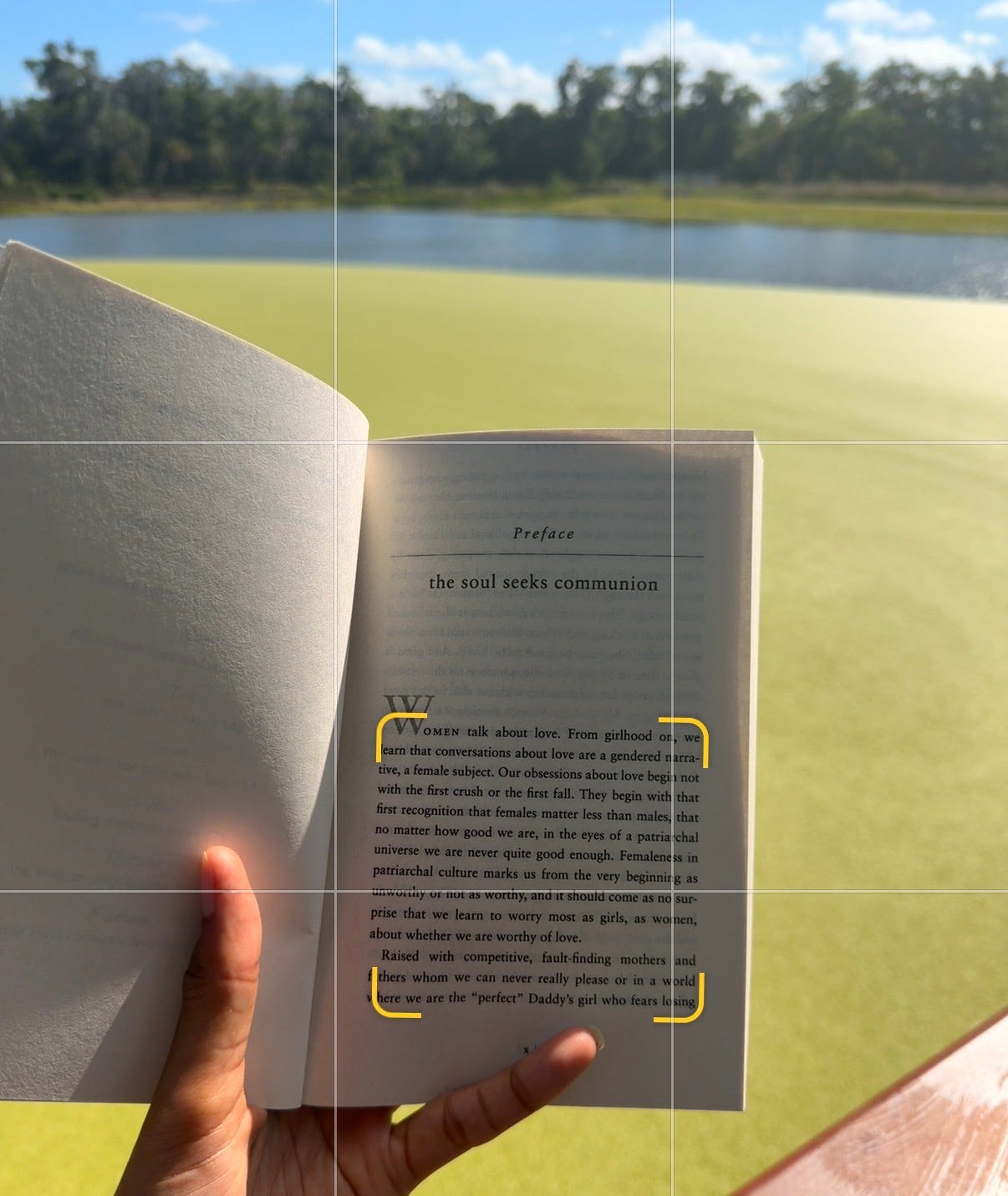
She talks about how, within our patriarchal society, love isn’t just something we experience as women; it’s something we’re conditioned to seek in specific ways. That when a girl doesn’t feel loved or secure in her birth family, she’s often pushed, consciously or not, to go find that love through men. It almost becomes her responsibility to prove her worth by being someone who’s chosen and desired. And reading that confirmed the aspects of conditioning I could recognize even within myself.
At the same time, hooks also talks about how we’re warned against being “the woman who loves too much,” like there’s something wrong with wanting love deeply, openly, fully. And I think as children, before we even understand any of these social dynamics, we internalize them in quieter ways. We’re told not to be too much, not to feel too much, not to express too much… which in a lot of ways can turn into not loving too much. Or, in a deeper sense, some may perceive this as not having been loved enough themselves.
And the irony she points out is that it’s not that we love too much, it’s that we don’t actually know how to love well at all. Not consistently, not consciously, and not in a way that is rooted in care rather than control, validation, or fear.
And that’s where this connects back to parenting for me. Because what I’ve been realizing is that so much of what we call love is actually just unmet needs trying to find fulfillment. That a lot of people aren’t making decisions from a grounded place of love, they’re making them from a place of emotional hunger. Wanting to feel chosen, validated, worthy, secure… and being willing to do almost anything to get that feeling.
Because that’s what they were inherently taught to do.
I’ve seen it play out with both mothers and fathers alike, and it’s the biggest hindrance for me now. I don’t want to have a child just because I desire one, if I haven’t also considered what it means to truly show up for them as their own person.
Not an extension of me
Not a reflection of what I wish I had
Not someone who has to carry what I didn’t process.
This is a cycle I want to break, not replicate or emulate.
And I say that without judgment, because it’s also naturally human. It happens.
Children are a blessing, whether expected or not, and life doesn’t always happen in perfectly planned conditions. But if you could control the timing of that, why wouldn’t you want to practice that kind of patience?
If I’m aware of these patterns—if I can clearly see them—why wouldn’t I take the time to understand myself more deeply and secure my own foundation before possibly bringing a child into the mix? A child who never asked to be born or to inherit any of the issues they’ll eventually have to face because of me.
I at least want to be aware of the energy I’m carrying, what I’ve internalized, and what I might unconsciously pass down if I don’t take the time to acknowledge it. And beyond that, I want the father of my children to want the same.
Because so many of us are walking around with emotional blueprints we didn’t choose, shaped both by what we received and what we didn’t, and then building our relationships, families, and lives from those same templates. I refuse to do that blindly.
Because parenting, to me now, feels like one of the most real and permanent expressions of love there is. And if love, as bell hooks describes it, is something that requires accountability, awareness, and a willingness to nurture growth, then parenting demands that on an even deeper level. Because children are deserving of that love without proof.
Dang…this one is a real tear-jerker for me
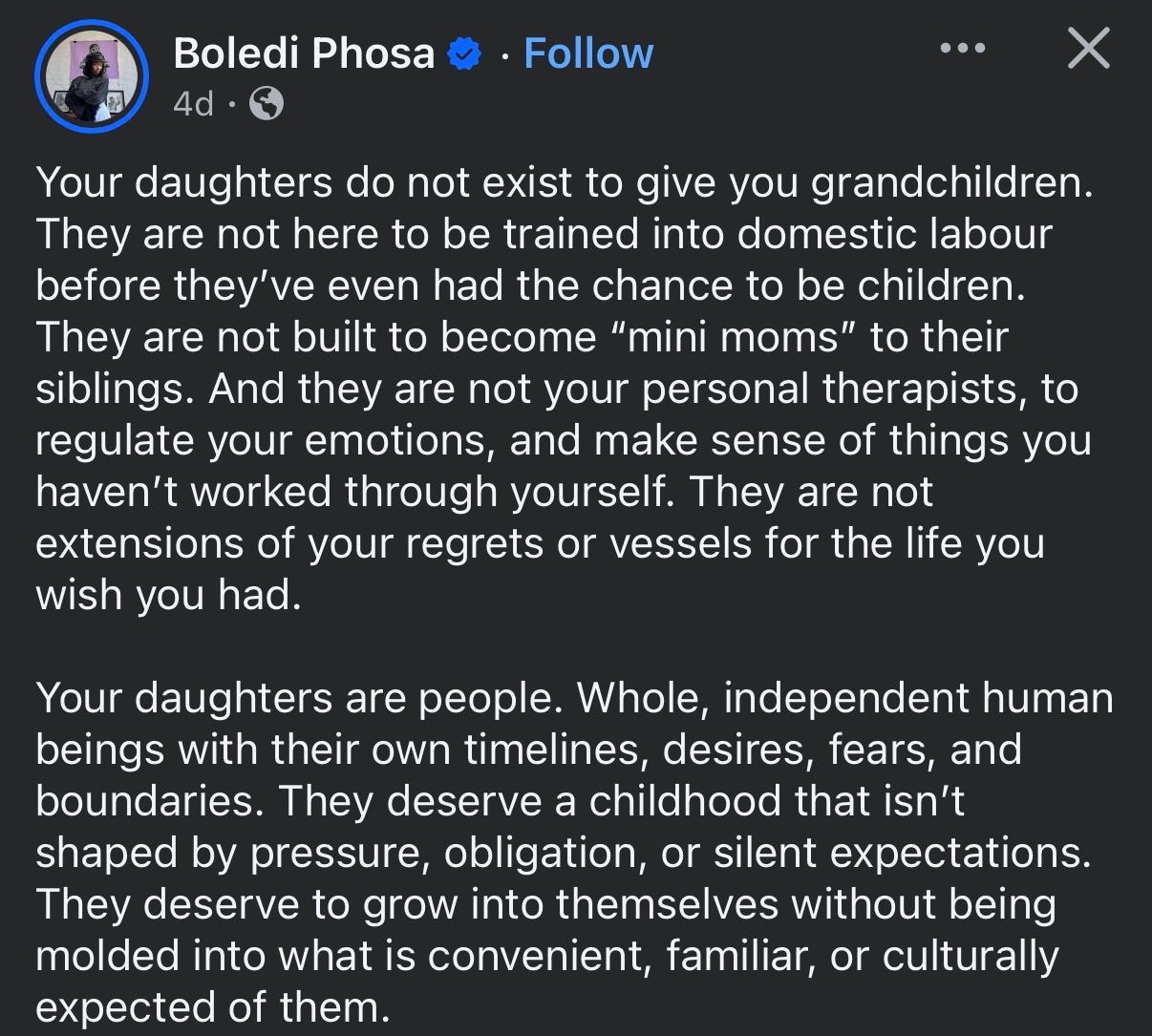
The fact that women are often the ones encouraged to seek love, to think deeply about it, to question it, and to grow through it is precisely what gives us the power to redefine it—to move beyond what we were shown and consciously choose something different.
Which is why the tears that fell while writing this aren’t coming from a place of heaviness or limitation. If anything, I feel incredibly empowered. Because it means I get to decide what kind of love I practice in my relationships and within my future family, what kind of foundation I want to set, and what kind of presence I want to provide.
I can see now how certain dynamics in my adult life mirror pieces of my childhood, not in a direct or obvious way, but through patterns. In what I tolerate, what feels triggering, and what I instinctively move toward. Some parts of my upbringing taught me safety, some taught me to over-function, some taught me to tolerate uncertainty, and some taught me that I don’t have to fight for what’s already being freely given.
I’m also realizing that sometimes what feels like chemistry is actually just familiarity. Not always good or bad, just familiar. And that awareness doesn’t feel like judgment, it feels like responsibility, because it brings me right back to the weight of what it actually means to shape someone’s identity and internal world before they even have the awareness to question it.
I want to be a mother to my children, not a mother to my expectations of them.
And I think that’s why I don’t feel rushed, I feel grateful. Grateful that I have more time to become more aware, more stable, and more intentional, to understand what I’ve inherited versus what I actually want to carry forward.
Because parenting isn’t about being perfect, but it is about being conscious and present.
The way we are loved, or not loved, becomes one of the first places we learn what we think we deserve. And adulthood is really the process of deciding whether we’re going to keep accepting those blueprints, or take the time to understand them and rewrite them.
And if I’m being honest, that’s the kind of foundation I’d want to give my child, not just love, but awareness. But I’m still becoming someone who can offer that fully to herself, and for the first time, that feels like a good enough reason to wait… not something to rush past.
If my stories, readings, and reflections bring value to your journey, inspire, or guide you, I would be truly grateful if you’d consider supporting me. You can become a paid subscriber, book an affordable tarot reading to help me practice and grow, or even offer a small contribution via my tip jar.
💛💛💛💛